|
| Mt Fuji from Kawaguchiko |
In my mind, Japan has many iconic " To Do " list.
On food, eat Kobe beef at one of the restaurants in its namesake city or fresh sashimi in Tsukiji Market, Tokyo.
On iconic views, we have the beautiful gardens of Kyoto, the million dollar night view of Hakodate or watching sakura blooms in Ueno Park.
One of the first thing to clear off my bucket list for Japan was to climb Mount Fuji.
 |
| Ashtray set depicting Japan |
 |
| Vase depicting ashtray set depicting Japan! |
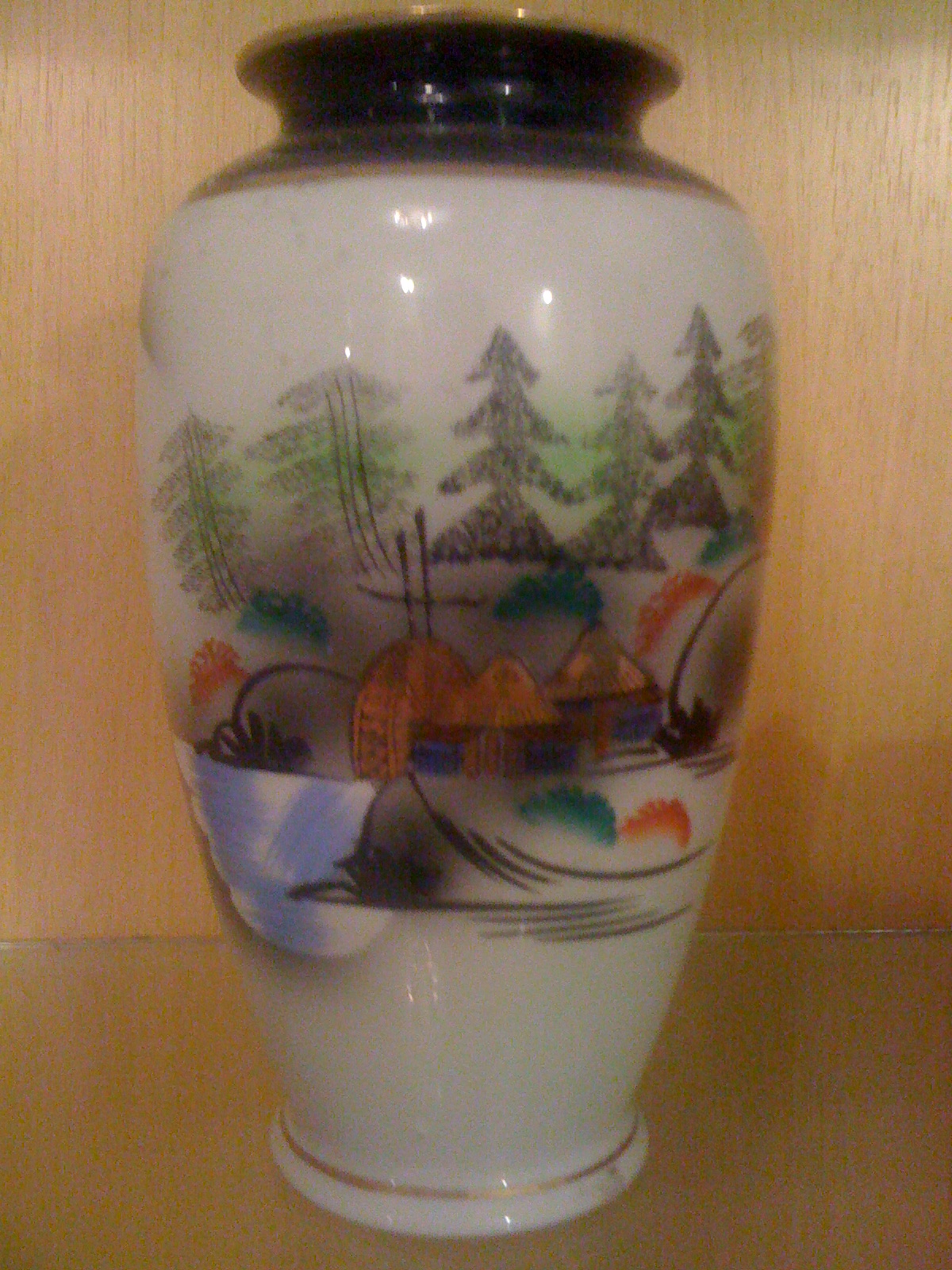
My parents have a set of ashtray and vase that sort of influenced me to climb Mount Fuji. The metallic gold ashtray set depicted a quaint Japanese village with a lazy meandering stream. Next to the stream was a water wheel which doubled as a cigarette lighter with the iconic Mount Fuji in the background. Complementing this was a hand drawn vase that depicted the same scene. Both have been around for more than 50 years. Growing up with these two items around must have imprinted the idea of seeing, climbing and feeling this great mountain.
 |
| Otsuki to Kawaguchiko |
 |
| Fujikyu Railway |
 |
| Bright atmosphere inside the carriage |
 |
| Kawaguchiko Station |
Starting from Tokyo, we used our Japan Rail Pass ( JR Pass ) part of the way until Otsuki. We then proceeded to Kawaguchiko using the Fujikyu Railway. Journey was about 4 hours as we missed the transfer at Otsuki. Guessed we were too slow in our exit from the JR train. The local train was colourful and decked with cartoon motifs of trains both in and outside of the carriage. Ours was decorated with Japanese cartoon trains aptly named " Thomas and Friends ".
 |
| Our stay at K's House Mt Fuji |
 |
| Our objective |
Upon reaching Kawaguchiko Station, we arranged with our guesthouse for a complimentary pick-up from the station. We stayed at K's House Mt Fuji which was located 5 minutes by car from the station. We gazed at this majestic mountain from our guesthouse that night and rested early. Our hearts were pounding.
 |
| Bus to 5th station but we rode a larger different bus the next morning |
Next morning, we had a simple breakfast of bread and eggs and packed the balance for lunch en-route. The bus bound for 5th Station departed from the Kawaguchiko Station. There were less than 10 passengers in the bus and nobody spoke. Each climber was engrossed with his or her own thoughts as we headed for the Yoshida Trail.
Fortunately it was a great morning with clear view of the summit. Note that you can only climb Fuji in the summer. The vista from the Yoshida 5th Station was great. Our climb began.
 |
| View of Fuji from 5th Station |
 |
| The view from 5th station towards the horizon |
 |
| Where we begun |
If you do not know the entrance to the trail, look for descending hikers after their sunrise climb. The first hour was fine with tree cover graduating to pine trees as we progressed higher. Above the tree line, there were switchbacks to pass and precarious retention walls sat oddly against the mountain. Warning signs on rockfall dot steeper sections of the climb. We quickened our pace and watched upwards for loose or sliding rocks. At the most vulnerable sections, concrete bunkers were built to protect hikers. We saw workmen in midget bulldozers working tirelessly to strengthen worn out slopes.
 |
| Miniature bulldozer background |
 |
| Still many toris ahead |
 |
| Concrete bunkers at the distance |
There were mountain huts along the trail. One of the hut we saw had a large elevated space with a central fireplace in the middle. Sleep was communal, en-suite bath none! Some huts could house more than 100 pax. I liked the jaded brass kettle that hung rigidly over the fireplace. You can buy snacks, drinks, gloves, walking sticks etc, things needed to make your climb comfortable.
 |
| Communal sleep area around fireplace |
 |
| One of many refueling stops available |
 |
| Roof weighed down with rocks |
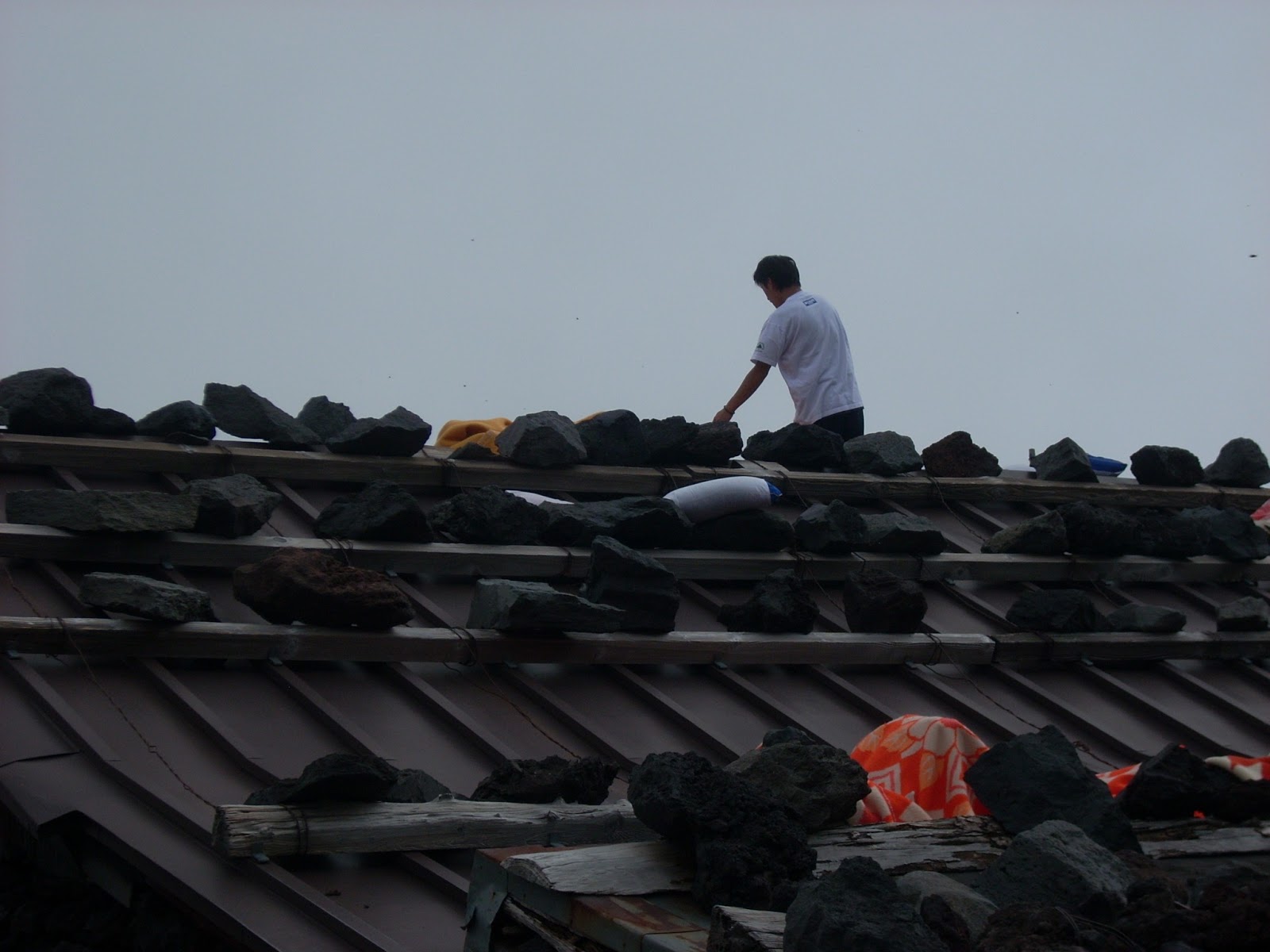
The winds were pretty strong above the cloud line. The sky displayed its ominous side and we were behind schedule. The roof of the mountain huts had to be pegged down by large rocks as a prevention. Fujisan after all is a solitary mountain. The full force of the winds were felt here, without the support of a mountain range.Vegetation was mostly shrubs and no protection for climbers against the elements. As we ascended higher, the huts began to look like little Legoland houses.
 |
| Each station grew smaller as we climbed |
 |
| Above cloud line already |
 |
| Strong winds blowing the fish kite |
As we approached the 8th station, the slopes were bare and without vegetation. There were patches of snow but were not fresh. Strong winds added to the chill but a blue coloured fish kite danced happily above the rooftop. After passing the fourth torii gate, we knew the summit was near.
 |
| Mt Fuji 3,250m |
 |
| Flying blankets |
 |
| Drying blankets |
 |
| Austere tori meant we were near top |
It was here that I learnt to equate Torii Gates as a place of refuge, literally. Each time we passed a torii gate, rest assured that there would be a mountain hut around the corner. The lower torii we saw was painted orange but as you climbed higher, they were left in its unvarnished state. Some were guarded by mythical stone lions. They make good excuse to take photographs and rest those tired feet. In the day, blankets and comforters were taken out to be aired. No wet wash here, only sun dried 'cleaning'.
 |
| Stone Lion guardians |
 |
| We have done it! |
 |
| Highest station |
Alas we saw the stone marker of Mt Fuji and we were delighted beyond words. The actual peak was another 50m away. Satisfied with this achievement, we bought a can of coke and another can of warm coffee to celebrate. The USD$6 per can was not a concern or time to pea count.
The summit of Fujisan was an anti-climax. The beautiful snow capped cone in postcards was actually a colourless cavity of rocks and dirty snow. However, the view of the distant horizon was simply AWESOME. In one moment the clouds cloud your view. Once lifted, the horizon was stunning and silent. We sat on a plain wooden bench by the edge and without talking.
We dared not traverse around the cone which would have taken another 45 minutes. At 4.00 pm, we were running late. Determined not to miss the last bus to Kawaguchiko, we headed down to the 5th station.
 |
| Around the crater |
 |
| Self potrait |
 |
| Another view |
We were quiet on the way down, immersed in our own thoughts. Above the clouds, the silence around you would be magnified in your head. I could hear my mind talking aloud in my thoughts. Climb a mountain and you would know what I am saying.
In reverse order, mountain huts that dot the distance began to enlarge as we approached. After 3 hours of brisked descent, we reached the 5th station. Along the way, we greeted "konnichiwa" to night climbers who were heading towards the mountain huts. Twilight had already set in but we did not care. Our focus was a nice hot bath and sleep with a smile on our face, twinkle in our eyes ...
Too bad we were late for the onsen bath at Kawaguchiko. Otherwise it would have been a 10/10 journey :-))
 |
| Still snow covered during summer |
 |
| Above the clouds |
 |
| Japan far below |
 |
| Serene |
 |
| Orientation of the route we had taken |
 |
| 5th station was quiet at night |


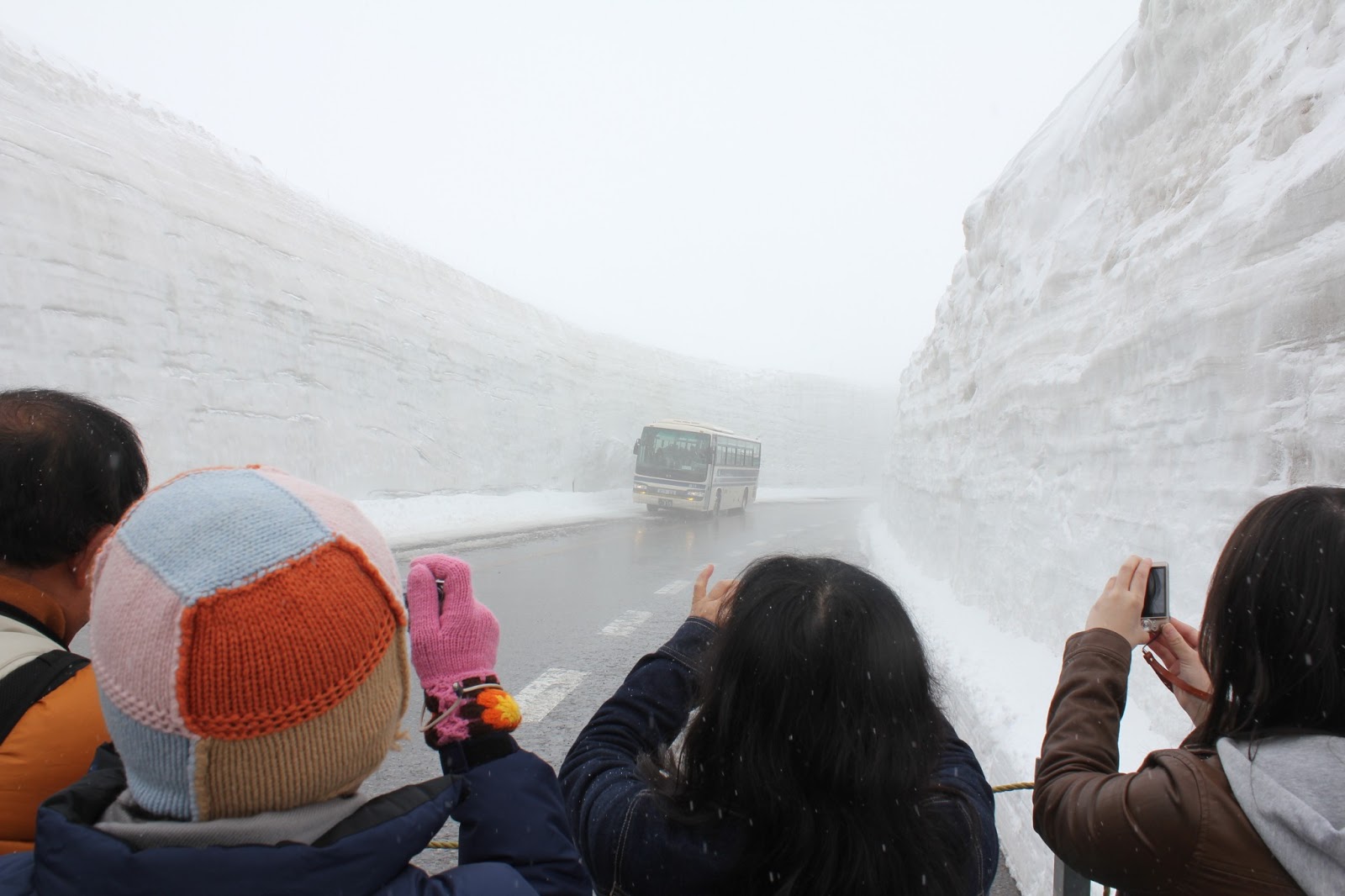

 Don't believe, look at these guys on the right.~~~~~>>>>>>>>>